Under the Hood: How Does AI Watermark Removal Work?
A deep dive into the technology behind Toop Pro. Learn about AI inpainting watermark removal and pixel reconstruction.
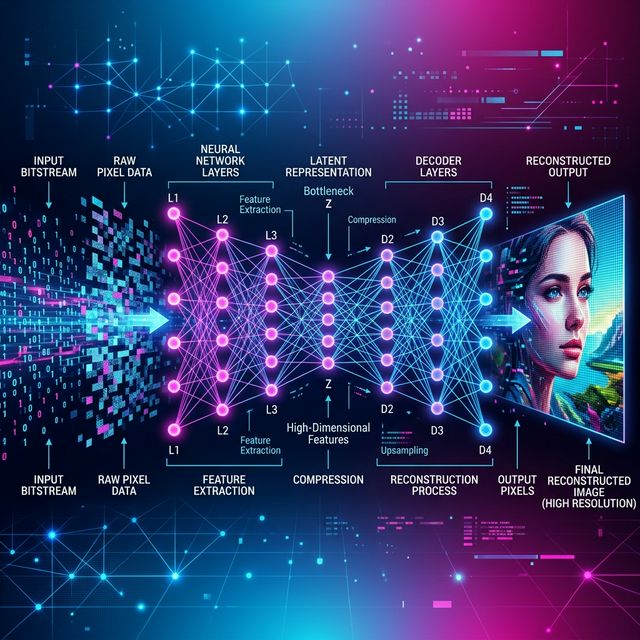
Have you ever wondered how does AI watermark removal work? Many people think it’s just a magic “eraser,” but the truth is much more fascinating. It involves complex neural networks and something called AI inpainting watermark technology.
The Legacy Way: Cropping and Masking
In the old days, software would simply find the coordinates of the logo and:
- Crop: Cut that part of the video out (losing content).
- Blur: Smudge the pixels (making it look messy).
The 2026 Way: Generative Inpainting
Modern tools like Toop Pro don’t “remove” the watermark in the traditional sense. Instead, they re-draw the part of the image covered by the logo.
1. Detection
The AI first scans the video frames to identify the watermark. Since TikTok logos bounce around, the AI must track the object’s movement with millisecond precision.
2. Contextual Analysis
Once the logo is identified, the AI looks at the surrounding pixels. If the watermark is over a person’s hair, it analyzes the hair’s texture and color.
3. Pixel Reconstruction (Inpainting)
The AI then uses a generative model (like a specialized version of Sora or Stable Diffusion) to “guess” what is behind the logo. It fills in the gap with brand new pixels that match the surrounding environment perfectly.
Why “AI Inpainting Watermark” is the Future
This technology allows for:
- Seamless Results: You can’t tell anything was ever there.
- Temporal Consistency: The removal stays smooth even as the video moves.
- Lossless Quality: The original 4K resolution is preserved throughout the process.
At Toop Pro, we are committed to pushing the boundaries of what’s possible with AI inpainting watermark removal. Our models are updated weekly to keep up with changing platform algorithms, ensuring our users always get the best results.